Top 5 Large Hadron Collider Findings

Photo of man examining accelerator
Photo courtesy CERN

When physicists at CERN cranked up the $10 billion Large Hadron Collider on Sept. 10, 2008, they had high (if contradictory) hopes. Like a child at Christmas, they wanted to get exactly what was on their wish list – the Higgs boson, some proof of supersymmetry – but also yearned for some wonderful surprise; because, if everything they predicted was right on the money, then particle physicists might well weep, for they would have no new worlds to conquer.

Years later, the LHC still hasn’t destroyed the planet or crushed physicists’ hopes. In fact, it’s made some amazing and somewhat perplexing discoveries. In this article, I take a (relatively) nontechnical look back at five the five most major findings so far.

5 Discoveries Made By the Large Hadron Collider (So Far)

10 History-making Hispanic Researchers

Photo of Luis Alvarez with balloons.
When not doing Nobel prize-winning research, Luis Alvarez built President Eisenhower an indoor golf-training machine, analyzed the Zapruder film and tried to locate an Egyptian pyramid’s treasure chamber using cosmic rays. Photo courtesy Lawrence Berkeley Laboratory

Far too many scientists who made major contributions to knowledge and human health go unremarked, forgotten save for the occasional postage stamp or Google doodle. So when I was offered the chance to write about a few of the many outstanding scientists who came from Spanish-speaking lands, cultures and ancestors, I was understandably excited…and a little nervous. On the one hand, combining such a varied assemblage of people under one term – especially the political term Hispanic – wasn’t ideal. On the other hand, it gave me the chance to explore, and raise awareness of, a remarkably diverse array of persons, backgrounds and accomplishments. I hope you’ll find their stories as inspiring as I did.

10 Hispanic Scientists You Should Know

There was Madness to Their Method: The Western World Before the Scientific Method

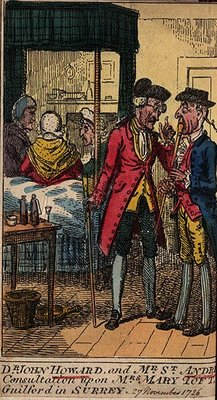
Cartoon of Mary Toft's doctors.
“My money’s on a lop-eared doe, or perhaps a Britannia Petite.”

One of the many things I enjoy about teaching my university class, Science, Feuds, Scandals and Hoaxes, is the opportunity to explore some of the most outrageous ideas ever to gain traction in the public mind. It’s easy to make fun today, but some of these ideas were grounded in reasoning that, though flawed, eventually gave rise to the right answer. Then again, there’s really no defending those doctors who thought that woman was giving birth to rabbit parts.

10 Things We Thought Were True Before the Scientific Method

How Painkillers Take the Edge Off

If only it were that simple.

Pain is essential to life, and not just in a Nietzschean, what-does-not-destroy-me-makes-me-stronger sense. It alerts us to injuries and prods us to stop poking at our wounds. It’s God’s megaphone, nature’s cone of shame. Pain is so essential, in fact, that losing our capacity for it can have life-threatening consequences.

Yet we’ve really only begun to understand how pain works in the past 40 years or so, thanks in large part to technological advances. Granted, most painkillers sport a list of side effects that reads like a Tomás de Torquemada’s own torture manual, but at least we understand something of the nervous mechanisms that underpin our owies. That said, just what on Earth is a COX inhibitor? Or an NSAID? And most important of all…

How do painkillers know where you hurt?

Throwable Fire Extinguishers: You Had Me at “Fire Grenade”

Disco ball and ceiling.
Products not recommended for disco infernos.

Fire is frightening and dangerous – that’s why they call it fire. So it’s a little strange that we have laws requiring us to stock canister extinguishers but not regulations requiring that we learn how, if or when to operate them. If you’re like most people, you probably don’t even know what kind of fire your extinguisher is rated for, and you likely have no idea when you last serviced or inspected the device, if ever.

Recently, a few companies have begun marketing new kinds of extinguishers, updated versions of fire grenades intended to make fighting fires as worry-free as possible. Lightweight and easy to use, they rely on the most basic of human skills: throwing. Which raises the question:

How do throwable fire extinguishers work?

Writing • Editing • Commentary