A Brief History of the Affordable Care Act

President Barack Obama signs the health insurance reform bill in the East Room of the White House, March 23, 2010.
President Obama signs the health insurance reform bill. (Official White House Photo by Chuck Kennedy)

The Patient Protection and Affordable Care Act of 2010 is the latest milestone in a century-long struggle to reform healthcare in America and the most significant achievement in that area since President Lyndon Johnson signed Medicare and Medicaid into law in 1965. Its passage was a hard-won victory marred by compromise and sapped by a ceaseless campaign to block its passage, halt its implementation and gut its funding – a struggle that continues to this day. Already the ACA has overcome one Supreme Court challenge, with another appearance before the highest court in the land likely in 2015.

Amid all the wrangling and vitriol, it’s easy to lose track of what happened and when, but don’t worry. My latest article has you covered.

The History of the Affordable Care Act

Just in Time for Halloween: 5 Nightmares of Nature

A preserved prickly anglerfish. Photo by Canley.

Impatient for Halloween? Why get your chills from midnight movies or lame costumes when the world already teems with the denizens of Mother Nature’s darkest dreams? From the tame to the tongue-devouring, these creepy creatures are guaranteed to fly, swim and burrow into you nightmares.  Dare to take my twisted tour of…

5 Animals That Look Like Monsters

Ramjets: Making Mock of Mach

1946 ramjet test. Image courtesy NASA.

The faster you go, the less inclined the air becomes to get out of your way. This simple fact, which stood for years as an impediment to breaking the sound barrier, can also be ingeniously harnessed to create an engine capable of zipping along at supersonic speeds without the fuel weight required by rockets.

In this article, I trace the history, science and engineering behind this revolutionary “flying stovepipe,” from its theoretical birth during the biplane era to its modern military and commercial offshoots. By the time we’re done, you’ll understand…

How Ramjets Work

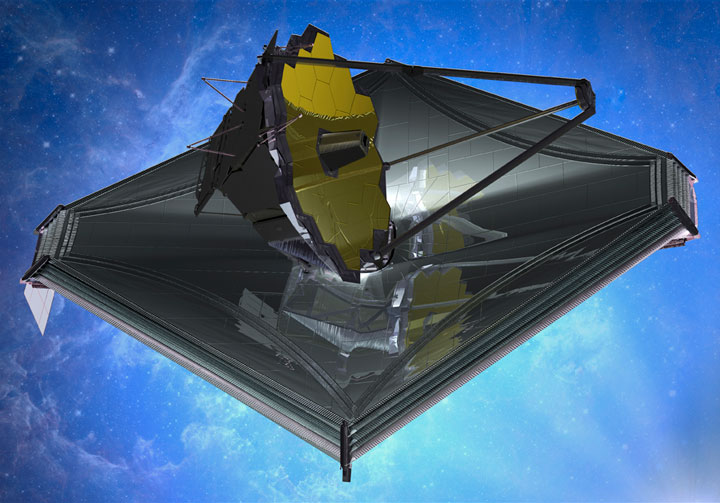
The James Webb Space Telescope Prepares to Peer Past Hubble

Artist's rendering of JWST
Artist’s rendering. Image courtesy NASA.

For two decades, the Earth-orbiting Hubble Space Telescope helped pierce the veil of time, image stellar nurseries and prove that galaxies collide. Now, the James Webb Space Telescope stands poised to take those observations to the next level, making the delicate observations possible only in the cold, dark spaces beyond the moon.

Slated for a 2018 launch date and team-built by 14 countries, 27 states and the District of Columbia, Webb will take astronomers closer to the beginning of time than ever before, granting glimpses of sights long hypothesized but never seen, from the birth of galaxies to light from the very first stars. Join us as we explore…

How the James Webb Space Telescope Will Work

Biohackers Take DIY Approach to Biological Future

Image of Neil Harbisson
Neil Harbisson, cyborg. Photo by Moon Ribas.

Not terribly long ago, do-it-yourself projects were the province of shade-tree mechanics and people who kept wood lathes in their garages. They dealt with grease and iron, wood and wiring, and left anything biological to the experts.

But today, body-modifying grinders implant jury-rigged biotech via the kitchen cutting board. Elsewhere, basement biohackers collaborate to build a better biological mousetrap, while volunteers teach basic genomics in community biotech spaces. Little by little, small pockets of enterprising people are working to make the long-promised post-human, cyborg, genomic future a reality.

How Biohacking Works

Writing • Editing • Commentary