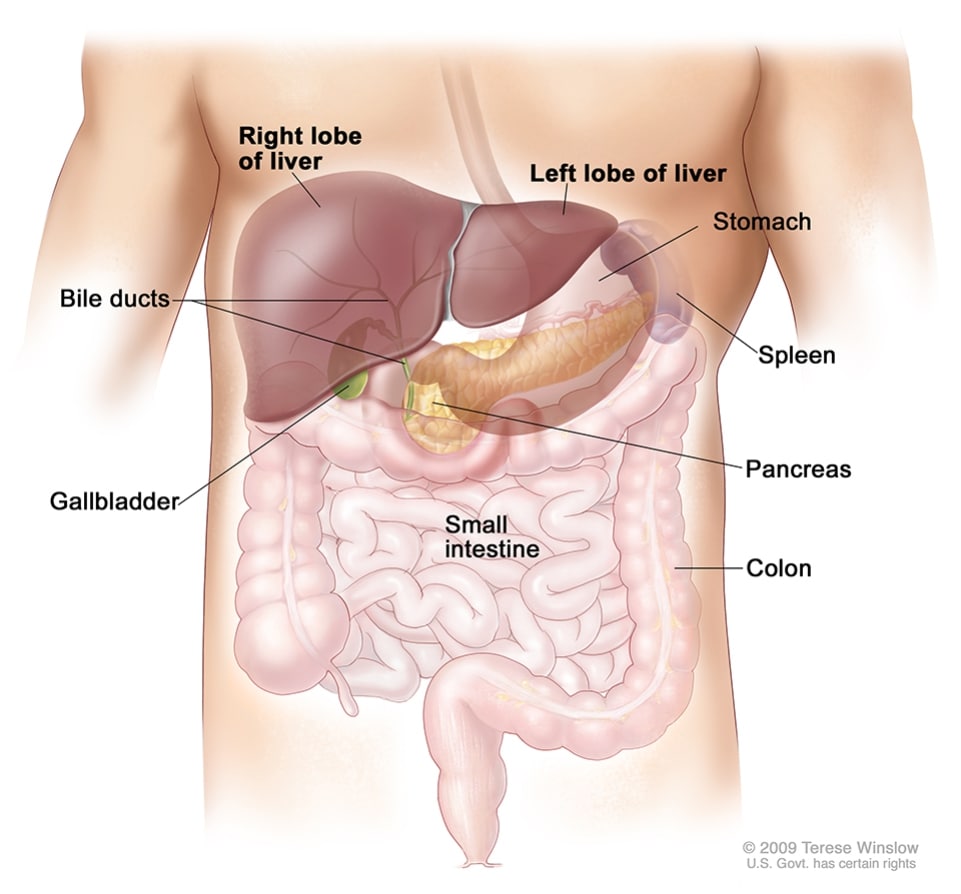
Image courtesy Centers for Disease Control and Prevention.
Scientists have identified drug targets that could one day make pancreatic cancer less painful — and more survivable — by knocking out key molecular signals. The signals form an essential part of the process by which cancer cells invade and spread through nearby nerves, wounding nerve endings.
Read/listen to my full story at KJZZ’s Arizona Science Desk:
Bodies buried in unusual postures and without funeral rites could suggest a history of revenge and blood feud in certain ancient Sonoran Desert cultures, according to a paper in the August 2016 edition of Current Anthropology.
The authors say a rude burial would have deeply distressed the victim’s family and community — and sent a message of dominance and defiance. Read/listen to my full story at KJZZ’s Arizona Science Desk:
Seventy-plus years into the Atomic Age, the United States still lacks a good radiation-dosage test.
But the ASU Radiation Biodosimetry Test (ARad), a device being developed by Arizona State University’s Biodesign Institute, could soon help doctors triage victims of a nuclear attack by gauging their exposure to ionizing radiation via changes in gene expression.
ARad is one of only a few tests under development that can detect radiation exposure levels. Read/listen to my full story at KJZZ’s Arizona Science Desk:
Photo courtesy National Oceanic and Atmospheric Administration.
The risk of a severe, multi-decade drought hitting the Southwest United States by the end of the century could reach as high as 99 percent if greenhouse gas emissions continue along current lines, says a paper by a team of scientists from Cornell University, Columbia University and NASA.
Smoke from Arizona’s Wallow Fire lends color to an Albuquerque, NM sunset. Photo by John Fowler.
Human-induced climate change has doubled forest fire damage in the West over the past 30 years, says a study published online early by the journal PNAS. But human effects on fire extend far beyond climate.