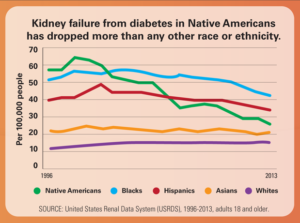
The Centers for Disease Control and Prevention (CDC) reports that rates of diabetes-related kidney failure among Native Americans dropped more than 54 percent between 1996 and 2013.
The finding were published by CDC and the Special Diabetes Program for Indians (SDPI), a $150 million annual grant program coordinated by the Indian Health Service.
After 4 billion years, the dwarf planet Ceres is still carrying a surprising amount of water weight — as much as 30 percent.
The finding, which was published in the Jan. 6 edition of the journal Science, is consistent with earlier models, and provides valuable clues to how Ceres formed.
The Lucy spacecraft flies by a Jupiter Trojan asteroid. Illustration by Peter Rubin – SwRI and SSL)
NASA’s Discovery Program has selected two projects, both with Arizona ties, to delve into the ancient history of the solar system.
One craft, Psyche, will head to the asteroid belt between Mars and Jupiter. The other, Lucy, will explore six asteroids that share an orbit with Jupiter. Scientists believe that the targets embody different aspects of early solar system history.
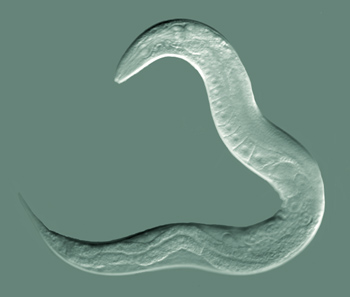
Discovered in the nematode c. elegans, miRNA were once thought to be leftovers of an era when RNA ruled life processes on Earth (image by Bob Goldstein, UNC Chapel Hill).
An Arizona State University team has used a unique high-throughput screening system to complete the largest-ever analysis of microRNAs (miRNA), the puzzling little cousins of RNA that help regulate gene expression.
Their findings offer a new explanation for why groups of similar miRNA sequences, called miRNA families, are so plentiful in higher species of animals, including humans.
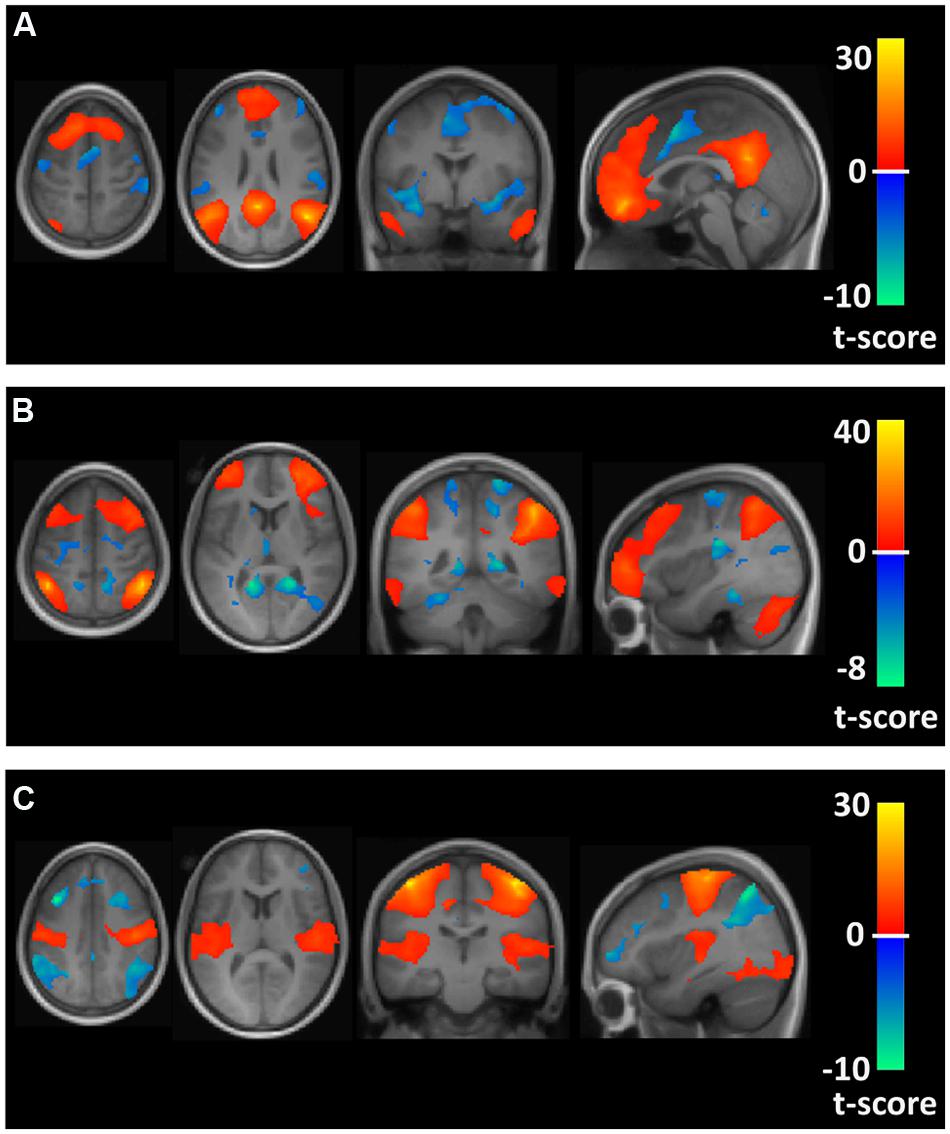
Spatial maps for (from top) the default mode network, frontoparietal network and motor network (image courtesy Gene Alexander of University of Arizona).
The book The Runner’s Brain told runners how their minds could change their running. Now a University of Arizona study says the reverse might be true as well.
Using functional connectivity MRI (fcMRI), they found significant differences in areas that are active when the brain is at rest. Possibly, such networks could play a key role in the effects of aging and neurodegenerative diseases.